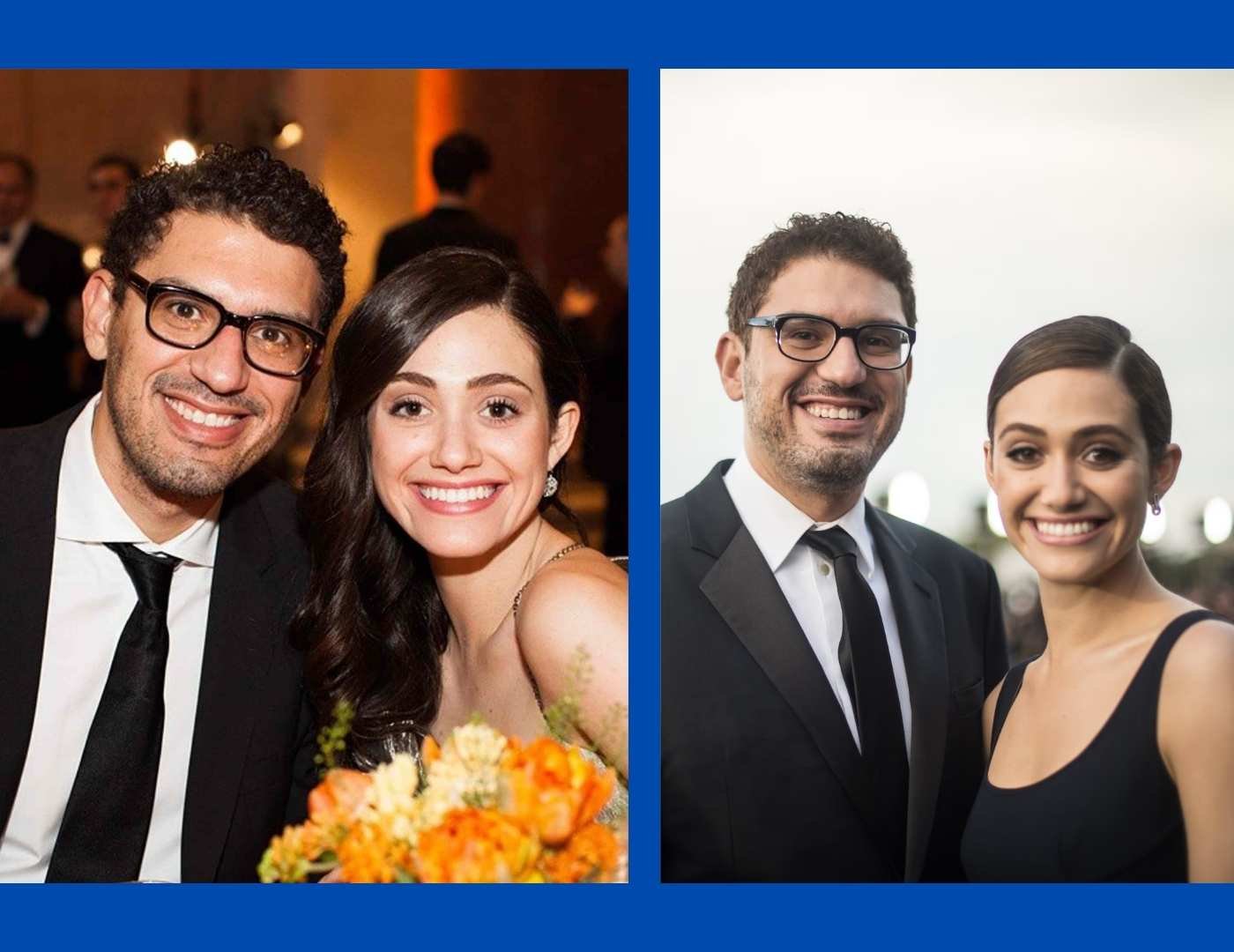
Sam Esmail Biography – American Filmmaker, TV Creator & Visionary Storyteller
Sam Esmail is a celebrated American screenwriter, director, and producer best known for creating the groundbreaking television series Mr. Robot. Born on September 17, 1977, in Hoboken, New Jersey, Esmail has risen from an aspiring filmmaker to one of the most influential voices in modern television and cinema. His unique blend of psychological storytelling, cinematic visuals, and character-driven narratives has earned him international recognition and industry acclaim. In this comprehensive biography, we’ll explore Sam Esmail’s early life, education, career breakthroughs, artistic style, notable works, personal life, and lasting legacy — detailing how he became a defining figure in storytelling for the 21st century.
Sam Esmail – Biography Table
| Field | Details |
|---|---|
| Full Name | Sam Esmail |
| Known As | Film & Television Creator, Screenwriter, Director, Producer |
| Date of Birth | September 17, 1977 |
| Place of Birth | Hoboken, New Jersey, United States |
| Nationality | American |
| Heritage | Egyptian-American |
| Education | NYU Tisch School of the Arts; MFA – American Film Institute Conservatory (2004) |
| Profession | Filmmaker, Showrunner, Producer |
| Years Active | 2004 – Present |
| Breakthrough Work | Mr. Robot (2015–2019) |
| Notable TV Series | Mr. Robot, Homecoming, Briarpatch, Gaslit, Angelyne, The Resort |
| Notable Films | Comet (2014), Leave the World Behind (2023) |
| Production Company | Esmail Corp |
| Spouse | Emmy Rossum (m. May 28, 2017) |
| Children | Two (daughter born 2021, son born 2023) |
| Awards & Honors | Golden Globe, Critics’ Choice, WGA Awards (via Mr. Robot) |
| Primary Genres | Psychological Thriller, Drama, Tech-Noir, Suspense |
| Signature Style | Cinematic framing, psychological depth, unconventional storytelling |
| Residence | New York City & Los Angeles |
| Current Status | Active in film and television development |
| Legacy | Creator of one of modern TV’s most influential series and a leading voice in contemporary storytelling |
Early Beginnings: Childhood and Family Background
Sam Esmail was born on September 17, 1977, in Hoboken, New Jersey, into a family of Egyptian descent. His upbringing was enriched by cultural influences that helped shape his creative perspective. Growing up, he displayed an early fascination with storytelling and visual media, often exploring film and narrative techniques on his own. Esmail’s Egyptian-American heritage added another layer of depth to his worldview, informing the psychological complexity seen in much of his work.
Formative Education and Early Interests
Esmail’s academic journey began with a passion for creativity and narrative arts. After completing his early schooling, he attended New York University’s Tisch School of the Arts, where he refined his craft in film and screenwriting. There, he experimented with various storytelling techniques and developed his voice as a filmmaker. He later pursued a Master of Fine Arts from the American Film Institute Conservatory, graduating in 2004. His education provided the foundation for both his technical skills and artistic ambition.
Early Career Challenges and Screenplay Recognition
After completing his education, Sam Esmail faced the typical early struggles of many filmmakers — taking on various jobs while tirelessly writing scripts. Esmail’s persistence paid off when two of his screenplays — Sequels, Remakes & Adaptations and Norm the Movie — were included on the Black List, an annual compilation of highly regarded screenplays that had yet to be produced. This recognition brought Esmail to the attention of industry executives and opened important doors in Hollywood.
Feature Film Debut: Comet and Artistic Identity
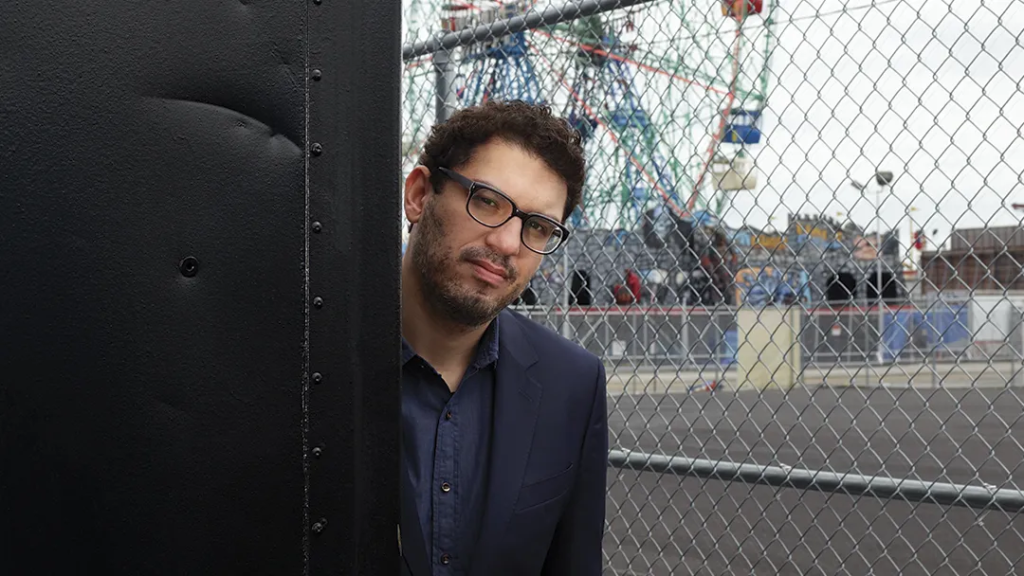
In 2014, Sam Esmail made his feature directorial debut with Comet, a romantic science fiction drama that he also wrote. The film starred Justin Long and Emmy Rossum, who would later become his wife. Comet explored themes of love, time, and memory, signaling Esmail’s interest in intimate, character-driven narratives and visual experimentation. Although the film received mixed reviews, it positioned Esmail as a filmmaker with a distinct artistic voice.
Breakthrough with Mr. Robot: Concept and Development
Esmail’s major breakthrough came with the creation of Mr. Robot, a psychological techno-thriller television series that debuted on USA Network on June 24, 2015. Originally conceived as a follow-up feature film to Comet, Esmail transformed the concept into a television project that captured the zeitgeist of digital culture, societal disillusionment, and personal identity. The series centers on Elliot Alderson, a socially anxious cybersecurity engineer who becomes involved with a group of hacktivists. Esmail drew inspiration from his own experiences with social anxiety, making the narrative deeply personal and psychologically layered.
Mr. Robot: Critical Acclaim and Cultural Impact
Mr. Robot quickly became a cultural phenomenon, praised for its bold storytelling, atmospheric tension, and psychological depth. Audiences and critics lauded the series for its authentic portrayal of hacking, emotional realism, and cinematic style. Under Esmail’s creative leadership, the show garnered numerous accolades, including Golden Globe Awards, Writers Guild of America Awards, and Critics’ Choice Television Awards — with additional recognition at the Primetime Emmy Awards. Its critical and popular success established Esmail as a visionary creator capable of reshaping television narratives.
Directorial Approach and Signature Style
One hallmark of Sam Esmail’s work is his distinct directorial approach, characterized by deliberate framing, atmospheric cinematography, and psychological focus. Esmail often prioritizes unconventional shots and narrative pacing that reflect internal states and emotional landscapes of characters. This style, especially prominent in Mr. Robot, contributes to the series’ mood — a blend of anxiety, isolation, and self-discovery. His collaboration with cinematographers and other creative partners further amplifies these visual and thematic elements.
Beyond Mr. Robot: Television Projects and Expansion
After Mr. Robot, Esmail expanded his television footprint. He directed and produced the first season of the anthology thriller Homecoming (2018–2020), starring Julia Roberts and Janelle Monáe, which received critical attention for its psychological intrigue. He also produced series like Briarpatch, Gaslit, Angelyne, and The Resort, showcasing his range and ambition as a television executive and storyteller. These projects allowed Esmail to explore diverse genres while maintaining his narrative vision.
Feature Films After Mr. Robot: Artistic Evolution
Continuing his work in film, Esmail wrote and directed Leave the World Behind, released in 2023, which further solidified his reputation for tackling complex subject matter. The film, based on a popular novel, blended social commentary with character-driven storytelling and became one of Netflix’s most popular English-language films, contributing significantly to Esmail’s ongoing influence as a filmmaker.
Collaborations with Rami Malek and Key Actors
A key aspect of Sam Esmail’s success was his collaboration with Rami Malek on Mr. Robot. Their creative partnership produced one of the most memorable television performances of the decade. Esmail’s ability to guide actors through psychologically demanding roles has defined many of his projects. His collaborations extend to actors such as Emmy Rossum, Christian Slater, Julia Roberts, and Janelle Monáe, reflecting his diverse range of working relationships and artistic trust.
Personal Life: Marriage and Family
Off-screen, Sam Esmail is married to Emmy Rossum, an American actress and singer, whom he wed on May 28, 2017. Together, they have two children — a daughter born in May 2021 and a son born in April 2023. Esmail splits his time between New York City, where his family resides, and Los Angeles, where his production company maintains activity. His personal life reflects a balance between family and creative pursuits, remaining grounded despite his success.
Cultural Identity and Influence
As a filmmaker of Egyptian-American descent, Esmail brings a unique cultural perspective to his storytelling. His background has influenced his work’s themes, particularly a sense of alienation and introspection found in many of his characters. While he doesn’t always foreground his heritage explicitly, these influences run beneath the narratives he constructs, offering depth and universality.
Industry Recognition and Awards
Throughout his career, Sam Esmail has received significant industry recognition. Mr. Robot earned numerous awards, such as the Writers Guild of America Award for Best New Series, multiple Golden Globe Awards, and Critics’ Choice Television Awards, along with several Primetime Emmy nominations. His work on both television and film has been celebrated by critics and peers, positioning him as a vital creative voice of his generation.
Esmail’s Production Company: Esmail Corp
To formalize his creative pursuits, Sam Esmail established Esmail Corp, his production company. Through this venture, he has developed and produced multiple series and projects, enabling him to nurture emerging talent and expand his storytelling footprint across platforms. Esmail Corp represents his evolution from filmmaker to industry leader, shaping content beyond his own directorial work.
Legacy of Mr. Robot in Today’s Media Landscape
The cultural legacy of Mr. Robot extends far beyond ratings and awards. Its portrayal of digital culture, hacking subcultures, and psychological complexity has inspired other creators and sparked conversations about technology, identity, and society. Esmail’s work paved the way for TV narratives that are as intellectually engaging as they are emotionally grounded.
Future Projects and Ongoing Influence
Sam Esmail continues to develop new projects, including potential reboots and adaptations of classic works, demonstrating both ambition and versatility. His role as producer, writer, and director across film and television suggests a creative evolution that will sustain his influence on entertainment for years to come.
Creative Philosophy and Artistic Vision
At the heart of Sam Esmail’s work is a belief in storytelling that challenges audiences, blends genres, and prioritizes emotional depth. Whether directing tense psychological sequences or intimate character moments, his creative philosophy remains centered on honesty and narrative complexity — qualities that define his place in contemporary media.
Conclusion
Sam Esmail stands as one of the most compelling and innovative creators in modern television and film. From his early education at Tisch and AFI, to his breakout success with Mr. Robot, to his ongoing contributions across multiple platforms, Esmail has reshaped narrative entertainment. His work reflects a blend of technical mastery, psychological insight, and artistic courage. As audiences and critics continue to engage with his stories, Sam Esmail’s legacy as a visionary filmmaker remains solidified in the landscape of global media.
Frequently Asked Questions (FAQs)
1. Who is Sam Esmail?
Sam Esmail is an American filmmaker — a screenwriter, director, and producer — best known for creating the critically acclaimed television series Mr. Robot.
2. When was Sam Esmail born?
Sam Esmail was born on September 17, 1977, in Hoboken, New Jersey.
3. What is Sam Esmail’s most famous work?
His most famous work is the psychological techno-thriller TV series Mr. Robot, which aired from 2015 to 2019.
4. Did Sam Esmail attend film school?
Yes, he studied at New York University’s Tisch School of the Arts and earned an MFA from the American Film Institute Conservatory.
5. Is Sam Esmail married?
Yes, he is married to actress Emmy Rossum, and they have two children together.
6. What other projects has Sam Esmail worked on?
Beyond Mr. Robot, Esmail directed and produced series like Homecoming, Briarpatch, Gaslit, Angelyne, and films like Comet and Leave the World Behind.
7. What makes Sam Esmail’s work distinctive?
Esmail’s work is known for psychological depth, cinematic visuals, and complex characters that challenge traditional storytelling.