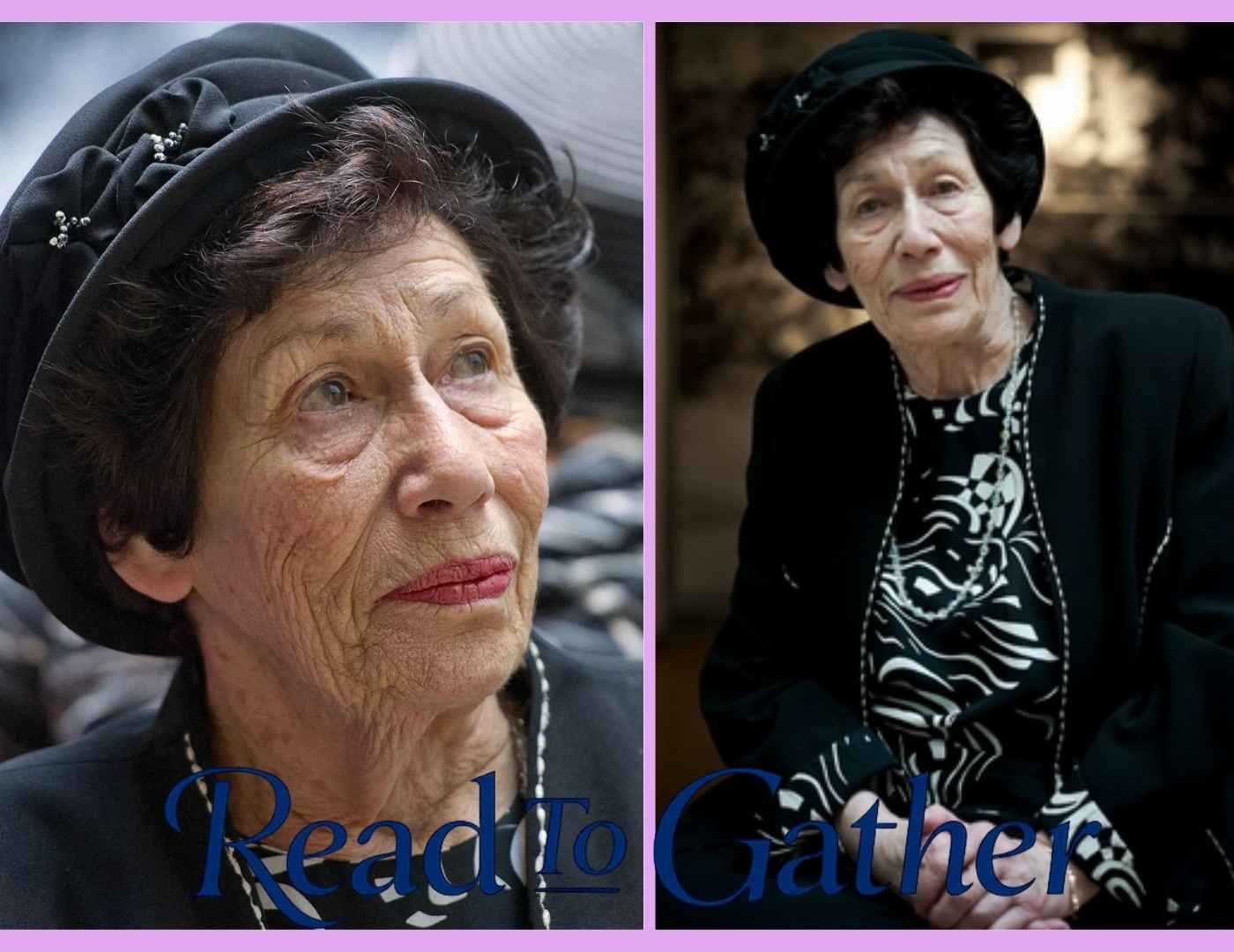
Gabi Goslar: A Detailed Biography of a Young Holocaust Survivor and Her Lasting Legacy
Gabi Goslar, born Rachel Gabriela Ida Goslar on October 25, 1940, in Amsterdam, Netherlands, is a remarkable figure in history whose life stands as a testament to endurance, resilience, and the human will to survive. Though not widely known as a public figure, Gabi’s story is deeply significant because she represents one of the youngest survivors of the Holocaust — enduring unimaginable hardship as a child and later building a life grounded in peace and remembrance.
Her narrative is interwoven with one of the most widely remembered accounts of World War II, as her older sister Hannah Pick‑Goslar was a close childhood friend of Anne Frank. While Gabi did not personally gain fame or public prominence, Gabi Goslar experiences and survival are emblematic of the countless children whose voices were nearly erased. This biography explores Gabi Goslar early life, family background, survival during Nazi persecution, life after the war, and enduring legacy of remembrance in a world that must never forget the lessons of history.
Gabi Goslar–Biography Table
| Category | Details |
|---|---|
| Full Name | Rachel Gabriela Ida Goslar |
| Known As | Gabi Goslar |
| Date of Birth | October 25, 1940 |
| Age at Death | 77 (passed in 2017, as reported) |
| Birthplace | Amsterdam, Netherlands |
| Nationality | Dutch / Later Israeli |
| Ethnicity | Jewish |
| Parents | Hans Yitzkhak Goslar (father), Ruth Judith Klee (mother) |
| Siblings | Hannah “Hanneli” Pick‑Goslar |
| Famous Connections | Sister Hannah was childhood friend of Anne Frank |
| Childhood Trauma | Survived Nazi persecution and Bergen‑Belsen concentration camp |
| Post-War Residence | Israel, settled in Petach Tikvah |
| Occupation | Private life; memoirist (wrote I Have to Tell Someone) |
| Public Appearances | Rare; lived mostly privately |
| Legacy | Holocaust survivor, memoirist, witness to history |
| Memoir / Writing | I Have to Tell Someone |
| Life Highlights | Survived Westerbork transit camp, Bergen‑Belsen, and the Lost Train |
| Personality Traits | Resilient, private, introspective, devoted to family and remembrance |
| Historical Importance | Represents child survivors of the Holocaust and human resilience |
| Net Worth | Private / Not publicly reported |
Early Life and Family Background
Rachel Gabriela Ida “Gabi” Goslar was born on October 25, 1940, into a German‑Jewish family living in Amsterdam, having fled Nazi Germany in hopes of finding safety. Gabi Goslar parents, Hans Yitzkhak Goslar and Ruth Judith Klee, were part of the German‑Jewish refugee community that sought refuge in the Netherlands before the expanding reach of Nazi persecution engulfed the region.
From the outset, Gabi’s childhood was marked by fear and uncertainty. Amsterdam — once seen as a place of relative safety — succumbed to Nazi occupation in May 1940, just weeks before Gabi Goslar birth. Anti‑Jewish laws and restrictions rapidly escalated, isolating Jewish families like the Goslars and stripping them of basic freedoms. While Gabi was too young to fully grasp the political climate, the tension and danger surrounding her family became a defining backdrop of her earliest years.
The Goslar household had deep ties to the Jewish community and some social connections to the Frank family. Gabi’s older sister, Hannah “Hanneli” Pick‑Goslar, was born in 1928 and would later become well known due to her close friendship with Anne Frank. Through this connection, aspects of Gabi’s own story intersect with one of the most powerful personal narratives of the Holocaust era.
Childhood Under Nazi Occupation
As Nazi control intensified in the Netherlands, the Goslar family’s life shifted rapidly from instability to outright persecution. Jewish families like theirs were forced to register, wear identifying badges, lose civil rights, and face economic disenfranchisement. By 1943, the reach of Nazi enforcement extended into the streets of Amsterdam, and Jews were systematically rounded up.
In June 1943, when Gabi was barely two years old, she and her family were arrested by German authorities. They were first taken to the Westerbork transit camp, a waystation for Jews awaiting deportation to the concentration camps in eastern Nazi‑controlled territories. As a small child, Gabi was unaware of the full implications of what was happening — but the separation from security and the harsh conditions of camp life were a brutal introduction to the world’s cruelty.
Life in Westerbork offered no comfort or familiarity. Families lived under constant fear, confined to barracks, separated from neighbors, and subject to the randomness and brutality of Nazi policy. For a toddler already traumatized by early loss — the Goslar family had lost Ruth in 1942 during childbirth — these experiences cemented a childhood defined by hardship and uncertainty.
Life Overview:-Terrence Duckett: The Ultimate Untold Story of Jasmine Guy’s Accomplished Ex-Husband
Deportation to Bergen‑Belsen and Struggle for Survival
From Westerbork, the Goslar family was deported to Bergen‑Belsen concentration camp in February 1944, where conditions were horrendous. Overcrowding, starvation, disease, and lack of sanitation made the camp one of the most deadly spaces of the Holocaust. Gabi was among the youngest prisoners, and survival for a child so small was by no means guaranteed.
At Bergen‑Belsen, inmates faced agonizing hardship. Food was scarce, illnesses such as typhus spread rapidly, and the relentless brutality of camp life tested every ounce of human endurance. Gabi’s survival depended on the care of those around her, particularly Gabi Goslar older sister Hannah, who fought daily to keep her alive amid deprivation and despair. A combination of familial protection, the kindness of other prisoners, and sheer resilience enabled Gabi to endure what most children could not.
As the war drew to a close, Bergen‑Belsen was evacuated in early 1945, and many prisoners were placed onto what became known as the “Lost Train” — a transport that moved without clear destination as Nazi forces attempted to evade advancing Allied troops. The journey was brutal: days without adequate food or water, worsening illness, and the constant shadow of death. Eventually, the train was liberated near Tröbitz, Germany, by Soviet forces, bringing an end to Gabi’s confinement but beginning a new chapter of recovery.
Liberation and Aftermath
The liberation of Bergen‑Belsen and the Lost Train marked the end of the immediate horrors of Nazi persecution, but for survivors like Gabi, healing was a long and painful process. At liberation, she was still just five years old, malnourished and weakened by months of severe deprivation. Gabi Goslar sister’s unwavering care and support were crucial in bringing her through the aftermath of the camps.
Like many survivors, the post‑war period was a time of regrouping and rebuilding. Gabi and Hannah were left without immediate family, as their parents had both perished during the Holocaust. But support from extended family and connections to survivors enabled the sisters to move forward. They were relocated to a children’s home in Laren, Netherlands, where they began rehabilitation from years of trauma and illness.
Despite the unimaginable losses and suffering, the sisters found paths forward. Their resilience in the face of such devastating circumstances demonstrated the profound human capacity for survival, healing, and renewal even when life seemed irreparably broken.
Life in Israel and Personal Growth
After receiving care and support, Gabi and her sister eventually moved to live with relatives in Geneva, Switzerland. In 1949, at about nine years old, Gabi relocated to Israel, a country that became home to many Holocaust survivors seeking safety and a fresh start after the war.
In Israel, Gabi entered a period of life defined by normalcy and family building rather than international spotlight. She grew up, married a man with the surname Mozes, and settled in Petach Tikvah, where she raised her family out of the public eye. Unlike Gabi Goslar older sister Hannah, who would become known as a vocal witness to the Holocaust and the friendship with Anne Frank, Gabi’s life remained quietly devoted to her loved ones and her community.
Gabi Goslar choice to embrace privacy reflects a deeply personal approach to healing — a desire to honor the past without making it the defining element of her daily existence. While she did not actively participate in public education or become a spokesperson for Holocaust remembrance, her survival itself was a powerful legacy and testament to resilience.
The Bond Between Gabi and Her Sister
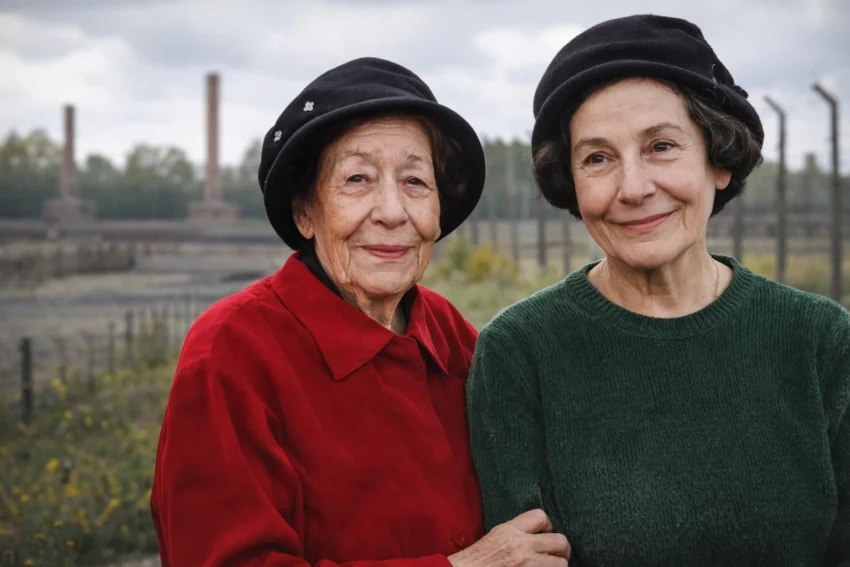
The relationship between Gabi and Hannah Elisabeth Pick‑Goslar was foundational to her survival and post‑war life. Hannah, born in 1928, was twelve years older than Gabi and had formed a close friendship with Anne Frank before the war.
Hannah’s role in protecting Gabi — from their time in Westerbork to the horrors of Bergen‑Belsen and the Lost Train — cannot be overstated. As an older sibling, she provided emotional support, strength, and a reason to keep going during moments when hope seemed nearly extinguished. This deep, unbreakable bond sustained both sisters through unimaginable trials and continued long after the war.
Their shared history also linked Gabi indirectly to one of the most widely read personal accounts of the Holocaust, The Diary of Anne Frank, through Hannah’s friendship with Anne. This association placed Gabi’s family story within the broader framework of Holocaust memory while honoring Gabi Goslar individual experience as a child survivor.
Gabi’s Memoir and Voice of Remembrance
In later years, Gabi contributed to Holocaust memory not through public speeches, but through her memoir — a personal account that allowed her experiences to educate future generations. Her memoir, titled I Have to Tell Someone, shared the reality of her early life, survival, and the emotional weight carried by those who endured such trauma.
The act of documenting and sharing her story ensured that her voice, and the voices of countless other survivors who chose not to speak publicly, would not be lost to history. Through her writing, she honored those who did not survive and reminded readers of the human cost of hatred, bigotry, and genocide.
Gabi’s memoir went beyond a simple retail narrative — it served as a powerful educational tool, encouraging compassion, tolerance, and reflection about the darkest chapters of human history. By sharing Gabi Goslar story, she helped preserve the lessons of the Holocaust for future generations long after the last survivors are gone.
Later Years and Legacy
In her later years, Gabi Goslar lived largely out of the spotlight, surrounded by family and supported by a community of fellow survivors and descendants. Some records indicate she passed away in 2017 at the age of 77, marking the end of a life that began amid devastation but evolved into quiet strength and family devotion.
Whether she lived into the mid‑2020s or passed earlier, her story continues to resonate as a reminder of the many silent survivors whose experiences were overshadowed by more public narratives. Gabi’s decision to live a private life underscores the varied ways in which people cope with trauma — not all choose public testimony, yet all deserve recognition and remembrance.
Gabi Goslar legacy is not one of fame but of courage, survival, and the importance of remembering even the quietest voices from history. Her life reaffirms that every survivor’s story matters — regardless of how public or private it may be.
Historical Importance of Gabi Goslar’s Story
Gabi Goslar’s life stands as a vivid example of how children — even those too young to remember details — were shaped by the Holocaust’s horrors. Her story highlights the tragic reality faced by millions of Jewish families, especially children, during World War II.
Though she did not become a household name, her survival enriches global understanding of the Holocaust’s human impact. By sharing her experiences and choosing to recount them in her memoir, she offered future generations a deeply personal lens through which to grapple with history’s most devastating atrocities.
Moreover, Gabi Goslar connection to Anne Frank — through her sister Hannah — places her story within the broader narrative of that era, reminding us that behind every historical account are real human beings whose lives were shaped by relentless upheaval, loss, and endurance.
Conclusion
Gabi Goslar lived a life shaped by trauma, loss, survival, and quiet strength. Born into a world at war, her earliest years were defined by persecution and the brutal reality of life in Nazi concentration camps. Against overwhelming odds, she survived the horrors of Bergen‑Belsen and the Lost Train, embodying resilience that defies simple explanation.
Though she chose a life of privacy after the war — building a family, living in peace, and avoiding public scrutiny — Gabi Goslar memoir and survival stand as lasting reminders of the Holocaust’s human toll. Gabi’s story offers profound lessons about resilience, remembrance, and the importance of honoring every voice, not just the most famous ones. Her legacy endures not through spectacle but through the quiet power of survival and memory.
Frequently Asked Questions (FAQs)
1. Who was Gabi Goslar?
Gabi Goslar was a Holocaust survivor born on October 25, 1940, in Amsterdam. She endured the horrors of Nazi persecution as a young child and later rebuilt her life in Israel.
2. What was Gabi Goslar’s birth name?
Her full recorded name is Rachel Gabriela Ida Goslar, and she was commonly known as Gabi.
3. How was Gabi Goslar related to Anne Frank?
While Gabi was too young to be Anne Frank’s friend, her older sister Hannah Pick‑Goslar was one of Anne’s closest childhood companions.
4. What concentration camp did Gabi Goslar survive?
Gabi was deported with her family to Bergen‑Belsen concentration camp, where she survived severe conditions as a young child.
5. Did Gabi Goslar write a book about her experiences?
Yes — she authored a memoir titled I Have to Tell Someone, in which she shared her story and honored the memory of those who did not survive.
6. Where did Gabi Goslar live after World War II?
After the war, Gabi moved to Israel, where she married and settled in Petach Tikvah with her family.
7. When did Gabi Goslar die?
Some sources suggest that Gabi passed away in 2017 at the age of 77, though exact public documentation remains limited due to her private life.