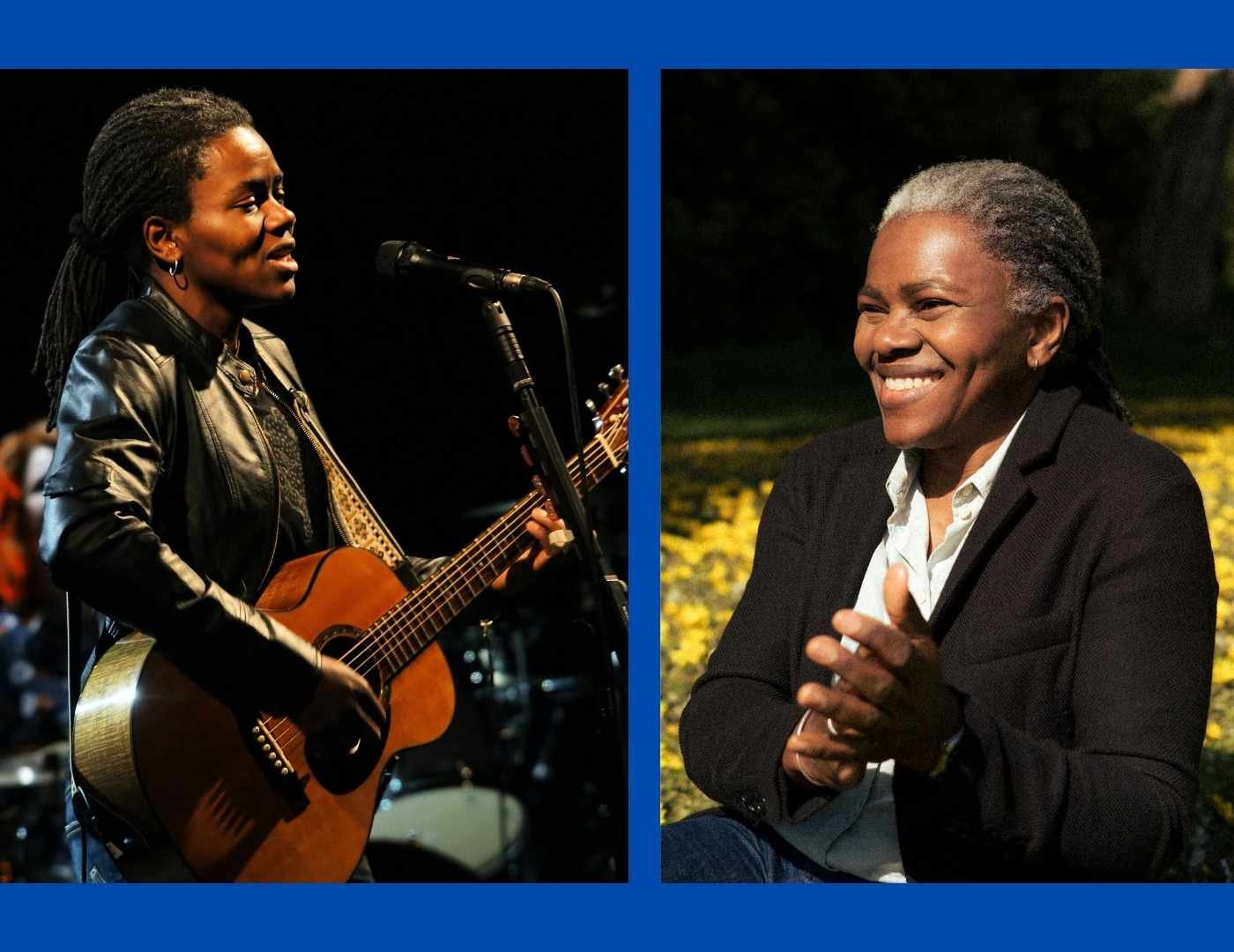
Tracy Chapman is an American singer-songwriter whose soulful voice, socially conscious lyrics, and timeless music have made her one of the most influential artists of her generation. Born on March 30, 1964, in Cleveland, Ohio, Chapman rose to international fame with her self-titled debut album in 1988, which included hits like “Fast Car” and “Talkin’ ’bout a Revolution.” Her music blends folk, rock, pop, and soul, and reflects her deep empathy, social awareness, and artistic honesty. Over decades, her work has resonated across generations, highlighting human experience with poetic precision and emotional depth.
Biography Table for Tracy Chapman:
| Field | Details |
|---|---|
| Full Name | Tracy Chapman |
| Date of Birth | March 30, 1964 |
| Age | 60 years (as of 2024) |
| Birthplace | Cleveland, Ohio, United States |
| Nationality | American |
| Profession | Singer, Songwriter, Musician |
| Genres | Folk, Rock, Pop, Blues, Soul |
| Instruments | Vocals, Acoustic Guitar, Ukulele |
| Years Active | 1986 – Present |
| Education | Tufts University (Anthropology & African Studies) |
| Record Label | Elektra Records |
| Famous Songs | Fast Car, Talkin’ ’bout a Revolution, Baby Can I Hold You, Give Me One Reason |
| Debut Album | Tracy Chapman (1988) |
| Major Awards | 4 Grammy Awards, including Best New Artist |
| Notable Achievement | First Black woman to write a No.1 Country song (Fast Car, 2023) |
| Net Worth (Estimated) | $8–10 million USD |
| Marital Status | Not publicly disclosed |
| Children | None publicly known |
| Residence | United States |
| Known For | Socially conscious lyrics and timeless acoustic music |
| Legacy | One of the most influential folk singer-songwriters of all time |
Early Life and Family Background
Tracy Chapman grew up in a racially mixed neighborhood in Cleveland’s South Broadway area, where early experiences shaped her worldview. Raised by her mother, Hazel Chapman, after her parents’ divorce when she was four, Tracy saw firsthand the struggles of working-class life. Her mother held various jobs, including work in a women’s football league and later as a columnist and TV host. These early years instilled in Chapman a profound awareness of inequality, struggle, and resilience — themes that would later permeate her music.
Musical Beginnings: Early Influences and First Steps
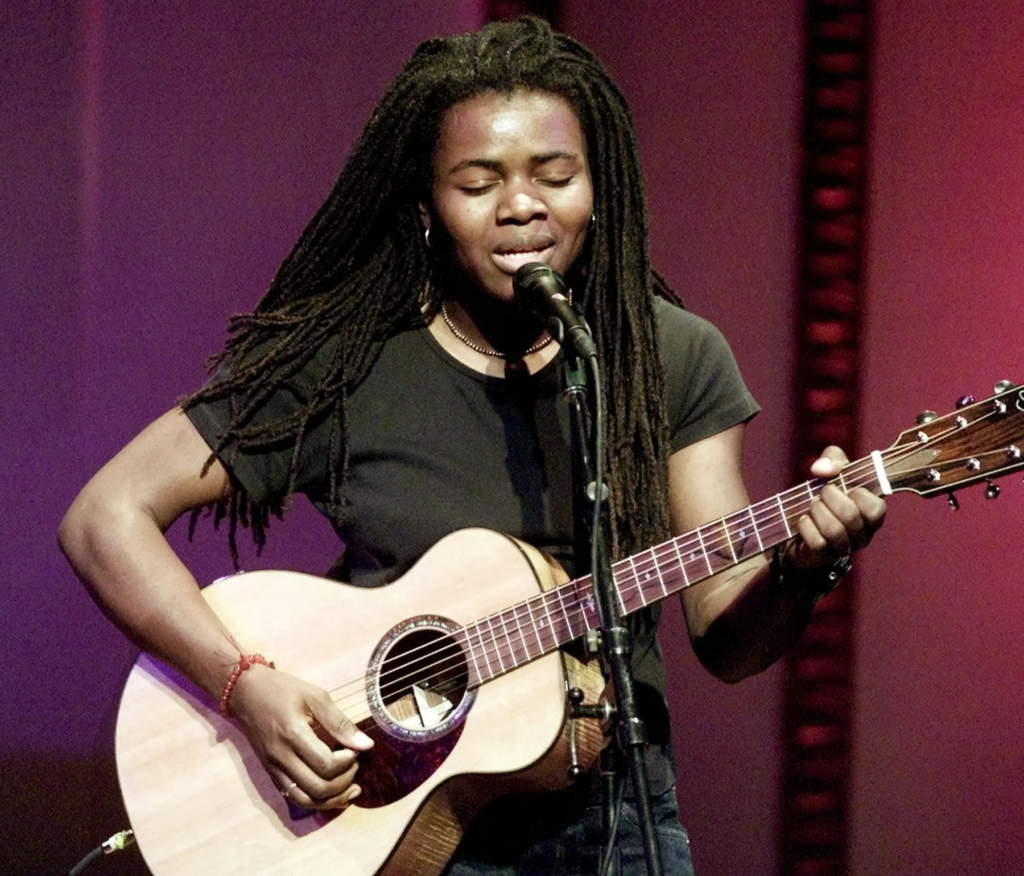
Chapman’s musical journey began in childhood. She first played the ukulele at age three, and later learned the organ and clarinet, eventually mastering her signature acoustic guitar. Surrounded by music from artists ranging from Gladys Knight and the Pips to Neil Diamond, her eclectic influences shaped her developing style. By age 14, she had composed her first socially reflective song. Her passion for storytelling and expression led her to write poetry, perform locally, and speak through song even before embarking on a professional career.
Education: From Cleveland to Tufts University
Chapman earned a scholarship to attend the Wooster School in Connecticut, where she deepened her interest in contemporary folk rock artists like Joni Mitchell and Bob Dylan. After graduating, she won a scholarship to attend Tufts University in Medford, Massachusetts, originally studying veterinary science before switching to anthropology with a focus on Western African cultures and ethnomusicology. While at Tufts, she performed in local folk clubs around Boston, refining her craft and building a local following that would set the stage for her breakthrough.
Discovery and Breakthrough: Signing With Elektra Records
Chapman’s big break came when a college friend introduced her to a music executive who was intrigued by her compelling performances. This connection helped her secure a contract with Elektra Records in 1987, leading to the recording of her debut album. With producer David Kershenbaum, Chapman captured the raw emotional power and clarity of her songwriting, blending folk simplicity with profound storytelling.
Debut Album: Tracy Chapman (1988)
Released in 1988, Tracy Chapman became a cultural phenomenon. The album’s first single, “Fast Car,” climbed the charts internationally, peaking at No. 6 on the Billboard Hot 100 and becoming an anthem of yearning, resilience, and hope. Other singles, including “Talkin’ ’bout a Revolution” and “Baby Can I Hold You,” showcased her range — from political commentary to personal reflection. The album topped charts, sold millions of copies worldwide, and earned Chapman six Grammy nominations and three Grammy Awards in 1989.
Themes and Style: Social Consciousness in Songwriting
Chapman’s music is celebrated for its social awareness and emotional honesty. She tackled topics such as economic hardship, racial inequality, and personal resilience with poetic directness. Songs like “Talkin’ ’bout a Revolution” captured the spirit of change and challenge, reflecting her early life experiences and deep commitment to storytelling. Her deep alto voice and sparse arrangements delivered message-driven lyrics with palpable sincerity.
Sophomore Projects and Continued Success
After her groundbreaking debut, Chapman released Crossroads in 1989, followed by Matters of the Heart in *1992. While these albums didn’t reach the commercial heights of her first, they demonstrated her evolving artistry and thematic depth. Chapman’s 1995 release New Beginning achieved renewed success, driven by the hit single “Give Me One Reason,” which won the Grammy Award for Best Rock Song and further solidified her status as a major musical voice.
Later Albums and Musical Evolution
Chapman continued to release studio albums, including Telling Stories (2000), Let It Rain (2002), Where You Live (2005), and Our Bright Future (2008). Each project showcased her commitment to authenticity and thematic exploration. Her songs often mixed personal narrative with broader cultural reflections, maintaining relevance across decades. While she slowed studio releases, her influence remained strong within folk and mainstream music circles.
Live Performances and Activism
Chapman’s live performances were notable for their emotional intimacy and quiet power. In 1988, she performed at Nelson Mandela’s 70th Birthday Tribute Concert in London before a crowd of tens of thousands, a defining moment early in her career. Over the years, she participated in human rights and benefit concerts, aligning her music with causes that matched her socially conscious lyrics and personal values.
Privacy and Personal Life
Despite her fame, Tracy Chapman has cultivated an intensely private personal life. She has rarely given interviews and prefers to let her music speak for itself. Chapman has never publicly confirmed details about her romantic relationships and has famously shunned the celebrity spotlight, focusing instead on music and personal reflection.
Grammy Awards and Recognition
Chapman’s career has been decorated with critical acclaim. At the 1989 Grammy Awards, she won Best New Artist, Best Female Pop Vocal Performance for “Fast Car,” and Best Contemporary Folk Album. Her later accolades include recognition for “Give Me One Reason.” Beyond awards, her albums have sold millions of copies worldwide, earning her a place among the most respected singer-songwriters of her era.
Cultural Impact and Legacy
Tracy Chapman’s influence extends far beyond chart success. Her music opened doors for socially conscious songwriting in mainstream pop and folk, inspiring a generation of artists. Critics and fans alike praise her vocal sincerity and lyrical depth, qualities that have ensured enduring appeal across generations.
The Timelessness of “Fast Car”
Chapman’s “Fast Car” remains one of the most iconic songs in modern music history. In 2023, country artist Luke Combs released a cover that reached No. 1 on the Billboard Country Airplay chart, making Chapman the first Black woman to have a No. 1 country song solely written by her. This achievement, and subsequent Grammy and CMA performances, reaffirmed the song’s cross-generational resonance.
Recognition by the Library of Congress
In 2025, Chapman’s debut album was inducted into the Library of Congress National Recording Registry, a distinction reserved for recordings deemed culturally, historically, or aesthetically significant. This honor cements her legacy as a transformative voice in American music.
Recent Public Appearances
After years of staying out of the spotlight, Chapman made a notable appearance at the 2024 Grammy Awards, performing “Fast Car” with Luke Combs. She has also discussed her reluctance to embrace music streaming, stating she prefers physical formats like CDs and vinyl in order to better support artists.
Musical Style and Influences
Chapman’s musical style blends folk, blues, soul, and pop, characterized by acoustic guitar arrangements and introspective lyrics. Her influences include classic folk and rock singer-songwriters she admired during her youth and college years, such as Joni Mitchell, Bob Dylan, and Jackson Browne. These inspirations shaped her approach to storytelling and songcraft throughout her career.
Philosophy: Artistry Over Fame
Throughout her career, Chapman has prioritized artistic integrity over mainstream fame. She has resisted the trappings of celebrity, choosing instead to create work that reflects her values — honesty, empathy, and cultural awareness. This approach has garnered respect from peers and listeners alike.
Influence on Future Generations
Chapman’s music continues to influence emerging artists across genres. Her blend of lyrical storytelling and musical simplicity has inspired countless songwriters to pursue authenticity over formulaic pop trends. Many cite her work as foundational in folk and socially conscious music movements.
Conclusion: A Legacy of Heart and Voice
Tracy Chapman stands as a singular figure in modern music — an artist whose voice resonated far beyond her chart success, touching on universal themes of hope, struggle, and humanity. From her humble Cleveland origins to global recognition, her career reflects unwavering artistic commitment and emotional depth. Through songs that remain etched in cultural memory, Chapman’s legacy lingers as a testament to music’s power to bridge divides, tell truth, and inspire connection.
Frequently Asked Questions (FAQs)
1. When was Tracy Chapman born?
Tracy Chapman was born on March 30, 1964, in Cleveland, Ohio.
2. What is Tracy Chapman best known for?
She is best known for her hit songs “Fast Car”, “Talkin’ ’bout a Revolution”, and “Give Me One Reason.”
3. How many Grammy Awards has Tracy Chapman won?
Chapman has won several Grammy Awards, including Best New Artist and Best Female Pop Vocal Performance.
4. Why is “Fast Car” significant?
“Fast Car” is significant for its storytelling, chart success, and in 2023 for becoming the first No. 1 country hit written solely by a Black woman.
5. Does Tracy Chapman still perform?
Chapman made a rare appearance at the 2024 Grammy Awards, but she has not toured regularly since 2009.
6. What themes are common in Tracy Chapman’s music?
Her songs often explore social issues, personal resilience, and human experience with poetic clarity.
7. Is Tracy Chapman married or private about her personal life?
Tracy Chapman is famously private and has not publicly discussed relationships or family details.